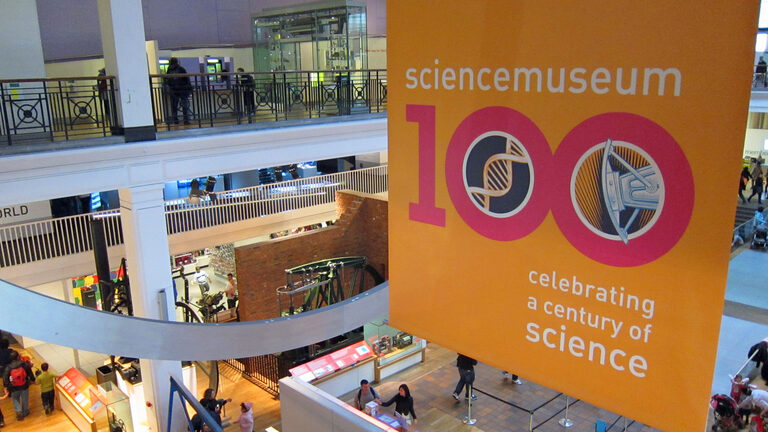
Looking down through the museum’s floors, with a banner for its 100th birthday.
- Science Museum Website
- Science Museum Apps and Online Games including the classic Launchball
Now here’s a really good day out: the Science Museum is just simply the best museum in London for kids.
It runs special sessions for children who are on the autistic spectrum - see below.
The exhibits themselves are fantastic - such as the Apollo 10 Command Module (that’s not a replica; it’s the actual spacecraft that orbited the moon in 1969) - and there are a bunch of special areas for children - and they have shows too!
The shows are very entertaining and properly educational; the Science Museum sets a very high standard - so high that they advise other museums on how to do kids exhibits and shows.
So - first things first:
- Entry to the Science Museum is free (but you really should either make a donation or buy something).
- You have to buy tickets for Wonderlab, movies in the 3D IMAX cinema, and some special shows and exhibitions, such as the Bubble Explorers show (£4.50 a person) and Power Up (from £10).
- Other shows and exhibitions are free but need a free ticket or booking, such as the Space Show and the exhibition ‘Becoming America’ (until 25 April 2027).
When you come in the main entrance, ignore the little glass lifts (elevators) in front of you and instead turn right into the body of the building. You’ll see some checkout desks in front of you where you can buy tickets for things that need them. For getting access to the other levels, there’s some much bigger lifts right in the middle of the building (go straight ahead through the Energy Hall), and those big lifts will take you straight up to Wonderlab (hands-on exhibits) or straight down to The Garden (little kids area).
Display screens throughout the museum tell you what shows and events are happening when (and where).
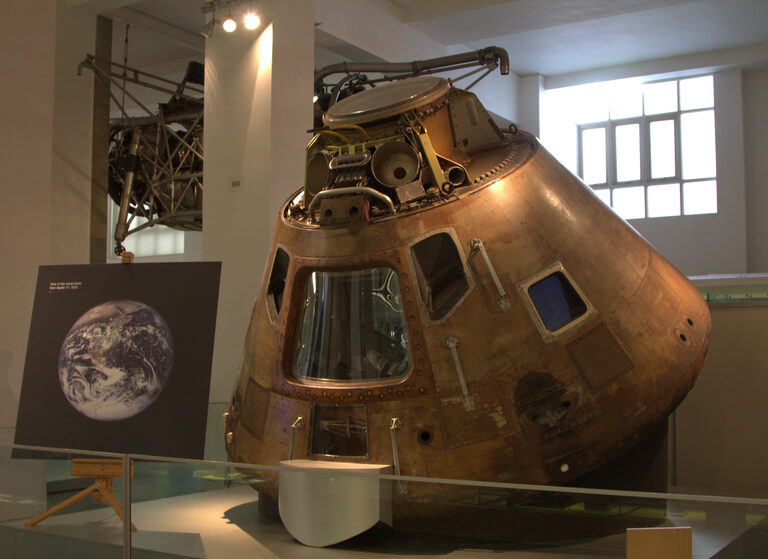
Apollo 10 command module ‘Charlie Brown’.

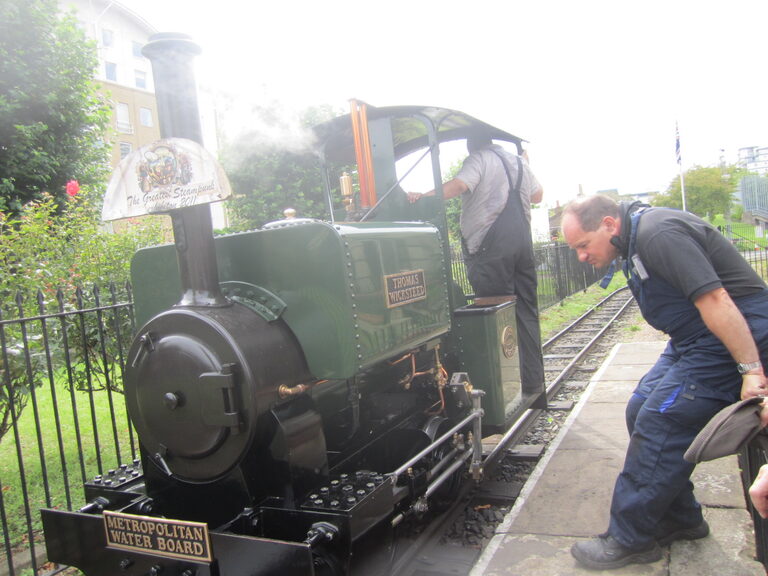
One of the museum’s steam engines running.
OK, so the sections specifically for kids are (working down from the top of the building - here’s a map):
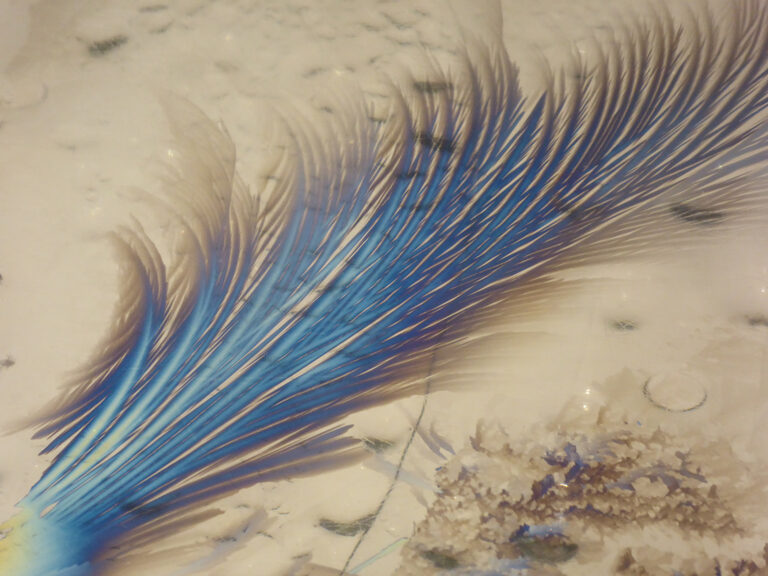
Ice crystals at a Wonderlab exhibit.
Wonderlab (formerly Launchpad)
Main building, 3rd floor.
Wonderlab is a collection of hands-on science activities, suitable for children from about age 5 up to teenagers.
The activities are extremely well devised to capture children’s interest while demonstrating the physical laws of nature.
The Museum’s ‘explainers’ (staff members who you can ask questions) circulate through the rooms, explaining how the different activities work and how to do them. Most of the activities are fairly self-explanatory, so they don’t need much explanation.
The space is safe for children to run around a little bit and get excited about the activities!
Through the day, the explainers also put on live demonstrations, such as real lightning strikes from the giant Tesla coil and experiments at the Chemistry Bar, and there are giant slides that show forces in motion.
Wonderlab Science Shows
-
Flash Bang Wallop - Fire and explosions. Great stuff! There are some loud bangs but you are carefully warned beforehand by the presenter. Our 3-year-old was ok with the bangs but didn’t really understand the content - at about age 5 they start to get something from it, and older children get more of course.
-
Recent shows have also included ‘Are we there yet?’, on the science and maths of speed, engines and transport, and ‘Is That Light?’, on the science of light.
All of these are suitable for kids right up to the teenage years, and are fairly interesting for adults to sit through as well. Yes, we’ve seen them all so many times that I’m starting to know the scripts myself.
They’re all really good, so you don’t need to aim for a particular one - just turn up and see whichever one is showing next. Shows run through the day and last about 20 minutes. Keep an eye out for the schedule when you’re in Wonderlab. If you’ve also booked Bubble Explorers in the basement (see below), leave time to get down from the 3rd floor.
A free show at weekends for ages 5-12. We haven’t seen this one yet but based on their other shows it’s likely to be very good!
Pattern Pod
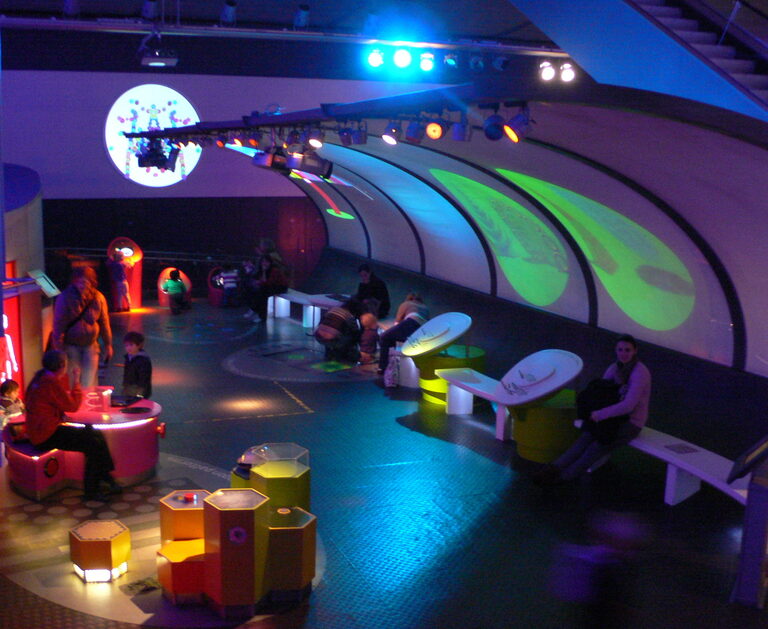
The Pattern Pod, with its coloured lights and screens.
In the ‘Wellcome Wing’ at the back of the building, ground floor.
A collection of large interactive exhibits - puzzles and various electronic exhibits that respond to the person working them - which help middling-sized children (i.e. start-of-primary-school-age) to begin recognising patterns in the world around them.
Lots of fun for kids but a bit dull for the grown-ups that are with them. Pattern Pod isn’t very large so it sometimes gets a bit overcrowded.
Main building, basement.
An interactive indoor playground for little kids (under-7s). Water play (bring your own waterproof apron), big Lego blocks, lots of things for interacting with that make interesting noises and/or have unusual textures.
(This may be obvious but you’re not allowed to leave your kids here or at any of the other Science Museum activity sections - the ‘explainers’ don’t take care of them on your behalf - you have to stay with them).
Nearby are toilets with baby changing, a Family Room and the buggy (stroller) park. There’s no café down here, but opposite The Garden there’s a picnic area with vending machines, where you can sit to eat food that you’ve brought in from outside.
Water play can get full up on busy days, so it’s worth heading here first, at museum opening time, to get in before the crowds start to build up.
An excellent show for pre-schoolers (kindergarten) and up. Lasts about half an hour. It’s a paid show (£4.50 a person, free for children aged 2 and under) in the Basement Studio, on Saturdays and Sundays in term time and every day in school holidays.
 A presenter holding up a tennis racket covered in bubbles at the Bubble Show.
Access for children on the autistic spectrum
At ‘Early Bird’ events the museum opens early for families with children who are on the autistic spectrum.
Their website also has a ‘visual story’ of visiting the Science Museum (which actually could be quite useful for all kinds of families).
A review of ‘Early Birds’, further discussion.
🛜 Free WiFi throughout the museum. Connect to ‘Free Museum Wi-Fi’.