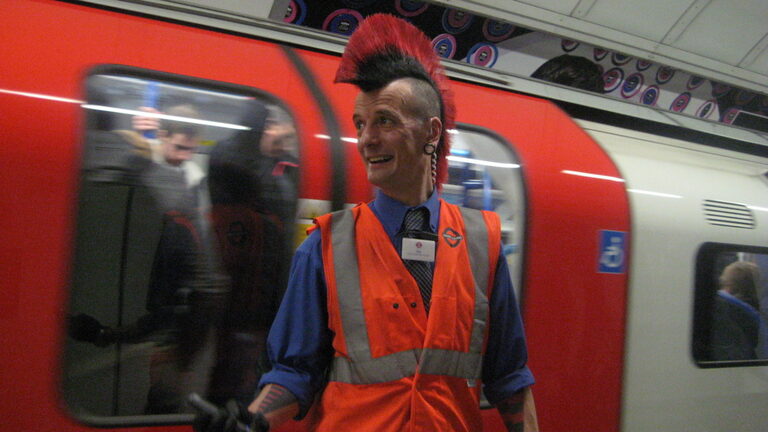
A Tube worker with a tall red mohican, on a platform beside a train.
The best way to get around London is to travel by Tube (‘London Underground’ i.e. the metro system). For short distances, go by bus; for very short distances (e.g. Leicester Square to Covent Garden), it’s quickest to walk.
You can pay for both Tube and bus with a contactless bank card or phone, or with an Oyster card.
Paying for the Tube, buses, trams and trains
Paying by contactless
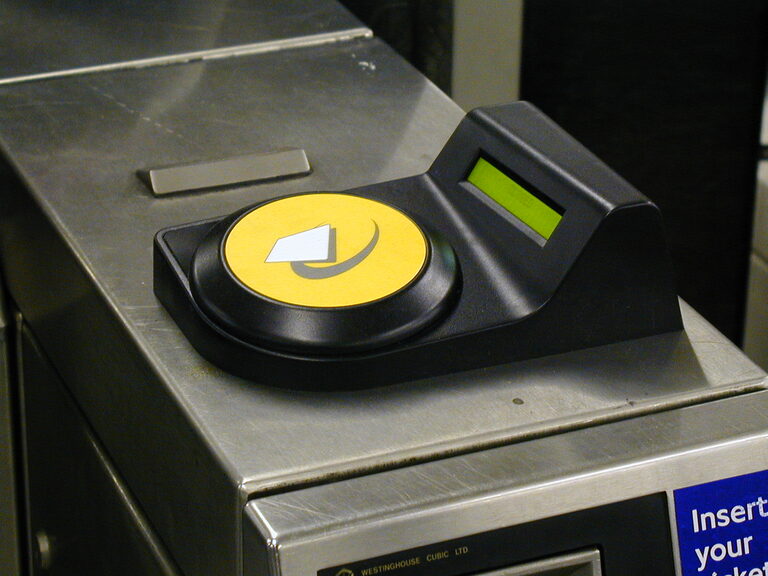
A yellow card reader on a London Underground ticket gate. Adults touch in on one at the start of the journey and touch out at the end.
- Adults can pay for the Tube, buses, trams, the DLR, the Elizabeth line, London Overground and most National Rail trains in London by touching a contactless bank card, or a phone or watch with Apple Pay or Google Pay, on a yellow card reader.
- On tube and trains, touch in at the start of your journey and touch out at the end, even if the gates are open or the station has no gates (there will still be a card reader).
- On trams and buses, touch in at the start of your journey - you don’t need to touch out.
- Use the same card/phone every time, and keep your phone charged, or you risk overpaying.
- Each person travelling on contactless needs a separate card or phone, but a phone or watch counts as a different card from the bank card linked to it, even on the same account, so one parent can pay for two people, one touching in with the card and the other with the phone.
- Hold only one card or phone to the reader, and keep other cards away from it, or the reader may charge the wrong one.
- Many cards from abroad work, but your bank may charge an overseas transaction fee, and a phone linked to a non-UK card sometimes doesn’t work, so carry the card itself as well.
- Contactless only charges adult fares, so see Children’s tickets below for what children pay.
- Check fares with Transport for London’s (TfL’s) single fare finder.
Paying with an Oyster card
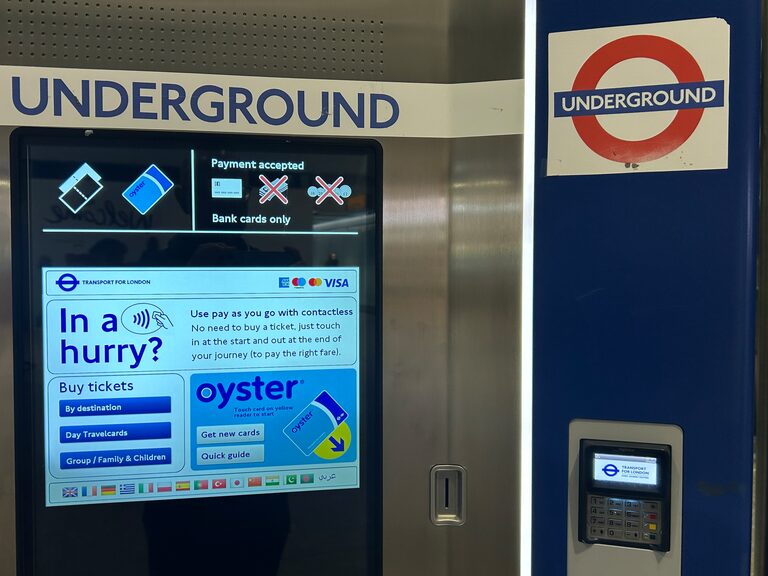
A Tube ticket machine, here at Heathrow Terminal 5, with flags along the bottom of the screen for changing the language.
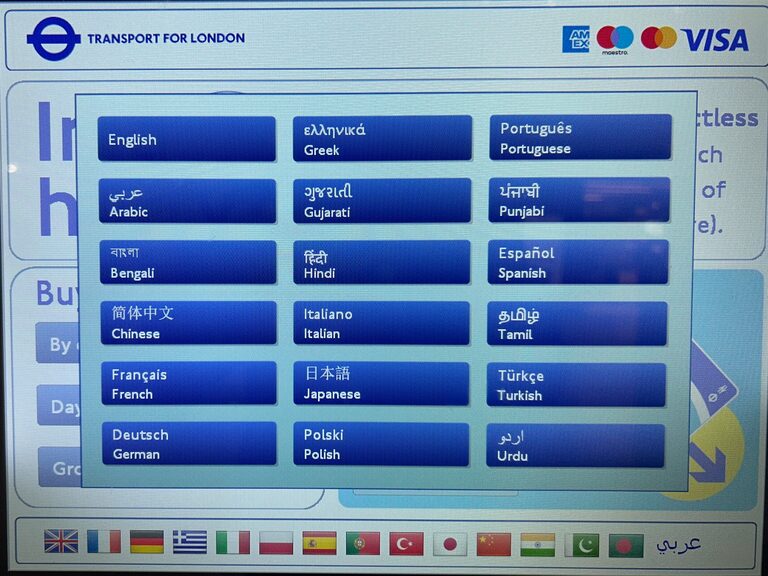
The ticket machine’s language menu, with 18 languages.
- An Oyster card is TfL’s own travel card, which you load with money and touch on the same yellow readers as a contactless card.
- You only need an Oyster card if you have no contactless card or phone that works in the UK, or if you want the Young Visitor discount for an 11 to 15-year-old (see Children’s tickets below), a Railcard discount or a 7 Day Travelcard.
- Oyster cards cost £10.50, which TfL doesn’t refund, at every Tube station and most London Overground and Elizabeth line stations, at Oyster Ticket Stops in many London newsagents and at TfL’s Visitor Centres.
- Tube ticket machines have a row of flags at the bottom of the start screen for switching from English to Français, Deutsch, Italiano, Español, 简体中文, हिन्दी, Português, 日本語, Polski, العربية, বাংলা, Ελληνικά, ગુજરાતી, ਪੰਜਾਬੀ, தமிழ், Türkçe or اردو.
- TfL’s Visitor Shop can post Visitor Oyster cards to you before you travel, for £10.50 per card plus postage, with £10 to £50 of credit on each, and you can’t buy them once you’re in London.
- Most Tube ticket machines refund up to £10 of credit left on a Visitor Oyster card at the end of your stay, but not the £10.50 the card cost.
- Top up an Oyster card at station ticket machines or an Oyster Ticket Stop, or a standard Oyster card (but not a Visitor Oyster card) in the TfL Go app once you’ve added it to a TfL account.
- Buy one Oyster card for each person, because two people can’t share a card on the same journey.
Daily and weekly caps
- Contactless and Oyster cap your fares at a set amount for the day or for the week from Monday to Sunday (the weekly cap).
- Each day’s cap runs from 4.30am to 4.29am the next morning.
- Use the same card or phone for every journey, because fares on different cards or phones are capped separately.
- Fares on the Heathrow Express and on Southeastern’s high-speed trains from St Pancras don’t count towards the cap.
Buses and trams
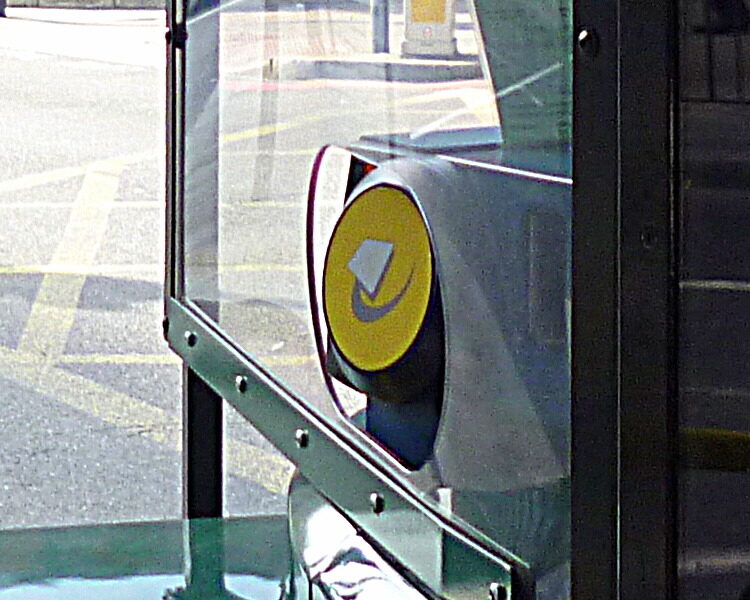
The card reader beside the driver of a London bus, seen through the cab’s glass. Adults touch in on it as they get on.
- London buses don’t take cash, so adults pay by touching a contactless card, a phone or watch, or an Oyster card on the yellow reader as they get on.
- On buses and trams, touch in only at the start of each ride.
- Trams have no card readers on board, so touch in on the yellow reader at the tram stop before you get on, and at Wimbledon use the tram readers on platform 10 even if you’ve already been through the station gates.
Children’s tickets
- Children under 11 ride buses and trams free, and they don’t need a ticket or card.
- Up to four children under 11 travel free with each paying adult on the Tube, the DLR, London Overground, the Elizabeth line and some National Rail trains in London, and they don’t need a ticket or card.
- On most other National Rail trains, children aged 5 to 15 need a child ticket from a ticket machine or ticket office, and under-5s travel free.
- Children aged 11 to 15 pay the adult fare by contactless, or half fare and half the daily cap for up to 14 days with TfL’s Young Visitor discount on an Oyster card or Visitor Oyster card.
- Staff at any Tube or London Overground station, or at a TfL Visitor Centre, can add the Young Visitor discount to the Oyster card while the child is with you.
Trains outside London
- Contactless also works on trains to some places outside London, such as Windsor and Gatwick Airport, and Oyster works at some of them, but not on the Elizabeth line from Iver to Reading.
- Before you touch in for a trip out of London, check on National Rail’s contactless page that your destination takes contactless, because if you can’t touch out at the other end you’ll be charged a maximum fare of up to £30.40, and you may also have to pay the full fare or a penalty fare of £100 plus the single fare (£50 plus the fare if you pay within 21 days).
- For day trips to places such as Oxford, Cambridge, Brighton or Canterbury, buy a train ticket at the station or online before you get on, and buy child tickets for children aged 5 to 15.
Tickets to avoid
- A paper single from a Tube ticket machine costs £7 for a journey in Zone 1, more than twice the £3.10 you pay by contactless or Oyster.
- An adult Day Travelcard costs at least £16.60, more than the daily cap on contactless or Oyster, which is £8.90 for Zones 1 and 2 and £16.30 for Zones 1 to 6.
- Don’t buy Oyster or Visitor Oyster cards for under-11s, who travel free, or for adults whose contactless card or phone works (unless they want a Railcard discount or a 7 Day Travelcard), because each card costs £10.50 and TfL doesn’t refund it.
We checked these fares on 24 October 2026.
Ignore the silly overpriced tourist buses: you can see all the sights by tube, on the regular bus and by (non-tourist) riverboat - suggested routes.
If you’re in the street and you need a taxi then hail (wave at) a black cab, they’re safe and the drivers have an encyclopaedic knowledge of London’s streets. Not all of the taxis are actually black, they come in other colours too, but if it has a yellow light saying TAXI then it’s a ‘black cab’ to Londoners. (If the yellow light is on then the vehicle is available for hire). If you can book in advance and you want to pay a bit less then get a minicab - make sure it’s a licensed one in order to avoid potentially-dodgy drivers. Minicab drivers don’t learn every street the way black cab drivers do, though they have to pass a map-reading and route-planning test to get their licence. Ride sharing apps (Uber and Bolt) also count as minicabs.
When you’re on the tube, let people get off the train before you try to get on, stand on the right on escalators, and don’t smoke. Don’t attempt the tube in rush-hour unless you know where you’re going and what you’re doing.
In the summer the busy parts of the tube can get very hot, so carry a bottle of water, and if you feel ill then get off the train and ask for help. Trains on the Circle, District, Hammersmith & City and Metropolitan lines have air conditioning.
Disabilities: For info about using the tube with a disability, take a look here and for more detail go here. Also if you have a buggy (stroller) then the info about which stations have lifts (elevators) can be very useful.
Pregnancy: If you’re pregnant, pick up a free special pin-badge to wear from a Transport for London (TfL) Visitor Centre or the London Transport Museum in Covent Garden, or order one from TfL to be posted to you. It has the Tube logo and text saying “Baby On Board”, which will inform other passengers that you really are pregnant and not just fat. Then, if there’s nowhere to sit, someone should give up their seat for you. More info here.
Maps
Save TfL’s Tube map on your phone before you set off. It isn’t drawn to scale, and in central London some stations that look far apart on it are a short walk from each other, so check a street map too.
And here’s a few more unusual Tube notices and signs…
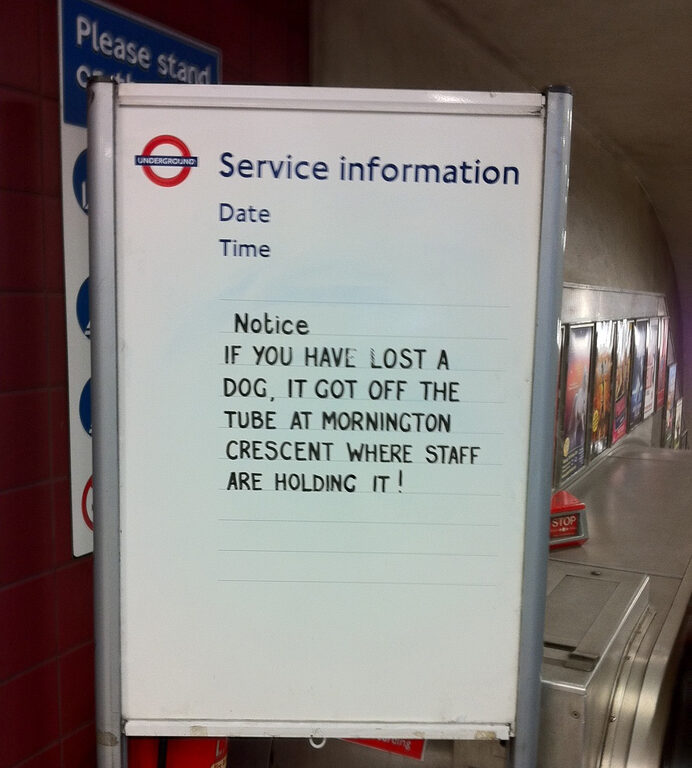
A notice telling the owner of a lost dog that staff at Mornington Crescent have it.
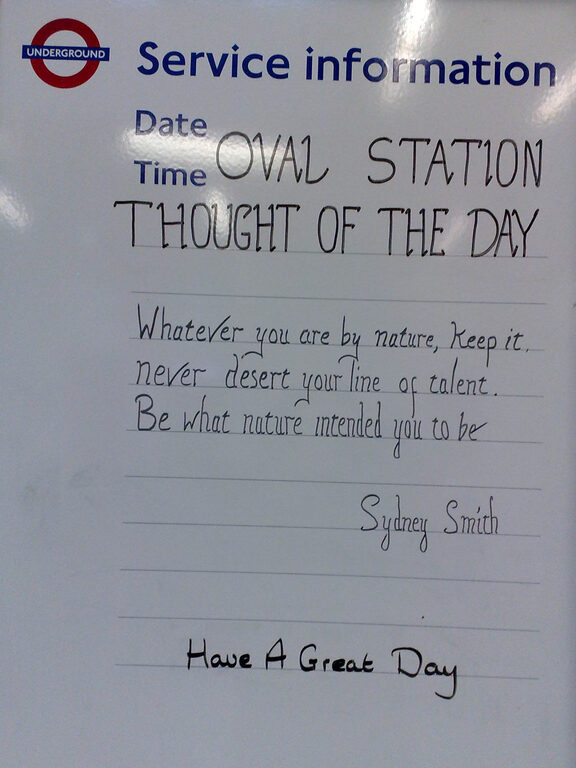
The handwritten “Thought of the Day” board at Oval station, quoting Sydney Smith.
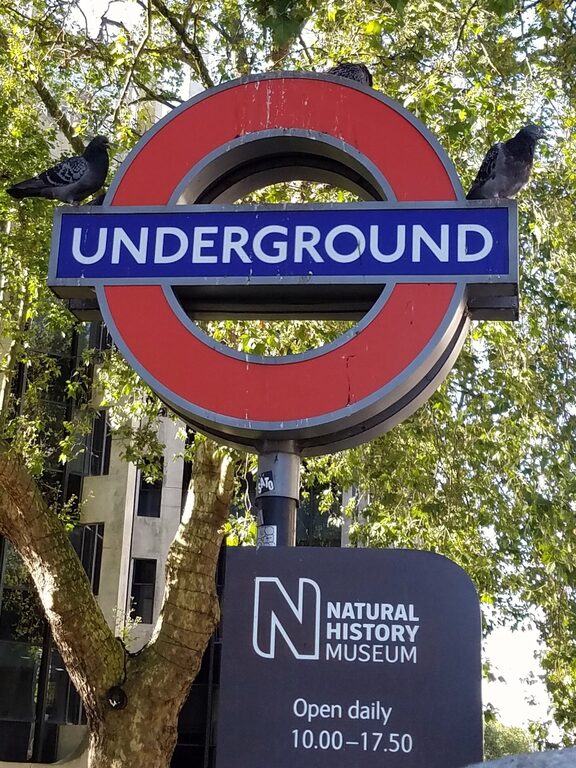
Pigeons perched on an Underground sign by the Natural History Museum.
🛜 Free WiFi in Tube stations for EE, O2, Three and Vodafone customers, including visitors with a UK SIM or eSIM from one of them. On EE, O2 and Vodafone, a pay as you go SIM needs a top-up in the last 30 days (at least £5 on EE and Vodafone), and on EE and Vodafone the WiFi can take a couple of days to start working after you top up. Most phones join ‘EE Wifi-Auto’, ‘WiFi Extra’ (O2), ‘Three_WIFI’ or ‘VodafoneWiFi’ automatically once WiFi is on, with no app or sign-up. There’s no WiFi in the tunnels, but on those networks your phone gets a 4G or 5G signal in the tunnels of the whole Elizabeth line and much of the Tube in central London, shown on this map.