For families
- Eurostar’s guide to travelling with children: under-4s travel free on your lap, a folded buggy (stroller) goes free, and every train has baby changing.
- Eurostar’s advice for travelling with babies and toddlers: there’s no 100ml liquid limit, so baby milk and food go through security with you; there’s no family lane.
- Toilets and baby changing at St Pancras: there are toilets with baby changing in the Arcade opposite the Eurostar arrivals exit, in The Circle and in the Eurostar departure lounge.
- The UK’s Electronic Travel Authorisation (ETA): visitors from most of Europe, the USA, Canada, Australia and many other countries need one for each traveller, babies included; it costs £20 in the UK ETA app or online, a decision can take up to 3 working days, and British and Irish citizens don’t need one.
- UK passport control: it’s at the station before you board, just after the French, Belgian or Dutch passport check; at Paris and Brussels children aged 8 or over who are at least 120cm tall can use the eGates with an adult, and if a child has a different surname from you, carry their birth certificate (or a letter from their parents if they aren’t yours).
- The EU’s Entry/Exit System: when you leave on the Eurostar, French border officers at St Pancras photograph children under 12 but don’t take their fingerprints.
- Things to do with kids at King’s Cross: the Platform 9¾ photo spot and Harry Potter shop are 5 minutes’ walk away, and the Granary Square fountains and Handyside Gardens playground are about 10 minutes away.
For autistic travellers
- Eurostar’s 360-degree video tour for autistic travellers: made with Ambitious about Autism in 2019, it shows each step of leaving London, from the ticket gates to your seat, but not the EU’s Entry/Exit System, which came later and adds a step at the French passport check, where travellers from outside the EU, British travellers included, have their face photographed and, from age 12, their fingerprints scanned.
- An autism-friendly guide to travelling by train (PDF, 2025): the rail industry’s guide, reviewed by the National Autistic Society, is useful if you’re going on by train.
- Videos made at St Pancras station in 2018 follow the signs from Eurostar arrivals to the Thameslink and Southeastern platforms.
- An unofficial video of the walk from the Tube to the Eurostar gates: a 4-minute video with captions, filmed in 2025.
- Eurostar’s help for travellers with autism: staff will guide you through the station and onto the train, the quietest times are after 2pm Monday to Thursday and before 2pm on Sunday, and you can pick up a Sunflower lanyard, which tells staff you may need extra help or time, at booth 5 in the Eurostar departures area.
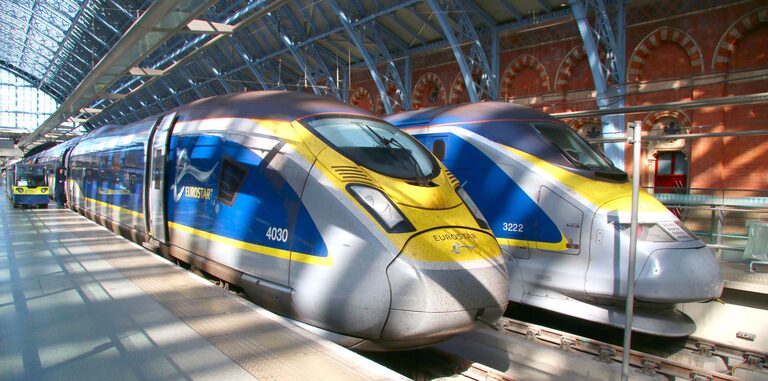
Two Eurostar trains at the platforms of St Pancras International.
St Pancras International is on Euston Road in King’s Cross, about 2 miles north of Charing Cross by road, which puts you in central London as soon as you step off the Eurostar. You go through passport checks before you board, so you walk straight off the train into the station. It’s a big station, and the walk to the Tube or the taxis takes a few minutes.
Getting from St Pancras to your hotel
We checked these fares in October 2026.
By Tube
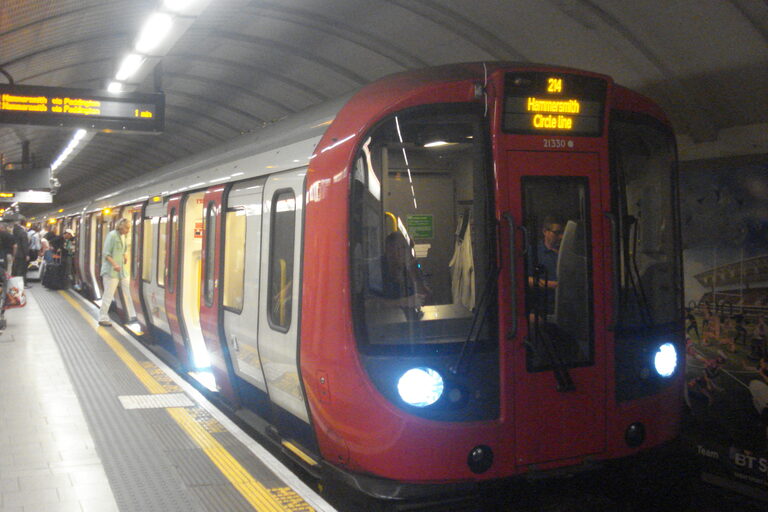
A Circle line train at King’s Cross St Pancras.
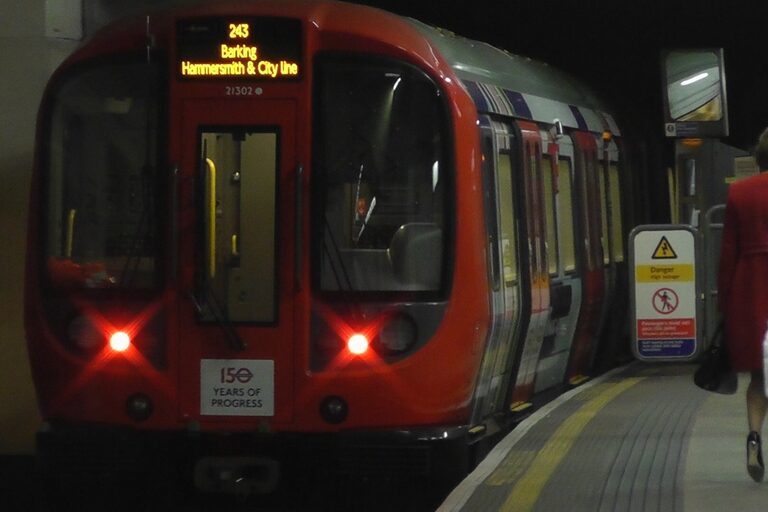
A Hammersmith & City line train at King’s Cross St Pancras.
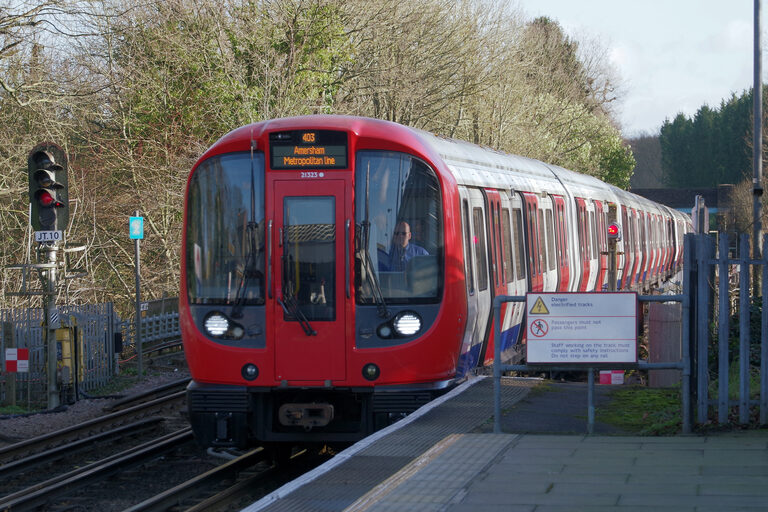
A Metropolitan line train at Chalfont & Latimer.
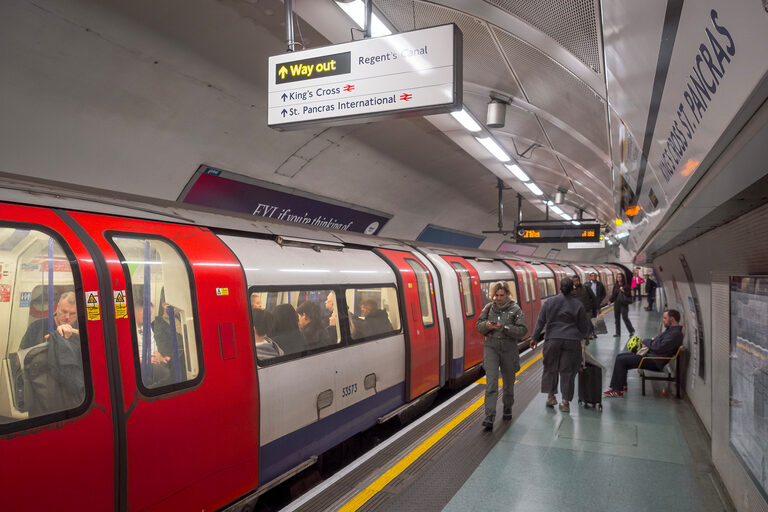
A Northern line train at King’s Cross St Pancras.
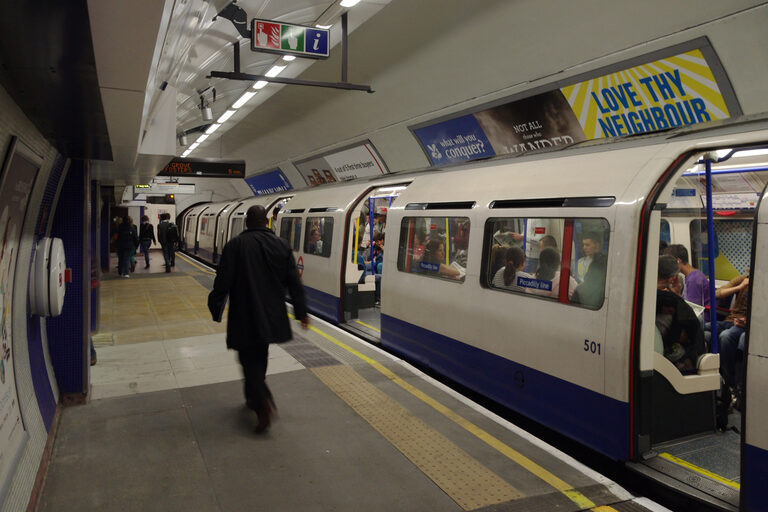
A Piccadilly line train at King’s Cross St Pancras.
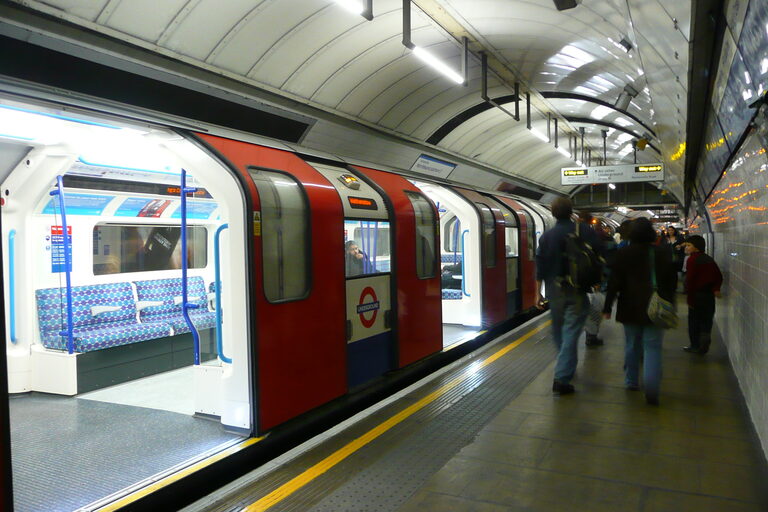
A Victoria line train at King’s Cross St Pancras.
Six Tube lines stop at King’s Cross St Pancras, with lifts (elevators) down from the station. The Circle, Hammersmith & City and Metropolitan lines use the same platforms, so check the line name on the screen on the front. A Zone 1 journey costs about £3.
Buying tickets for the Tube
Paying by contactless
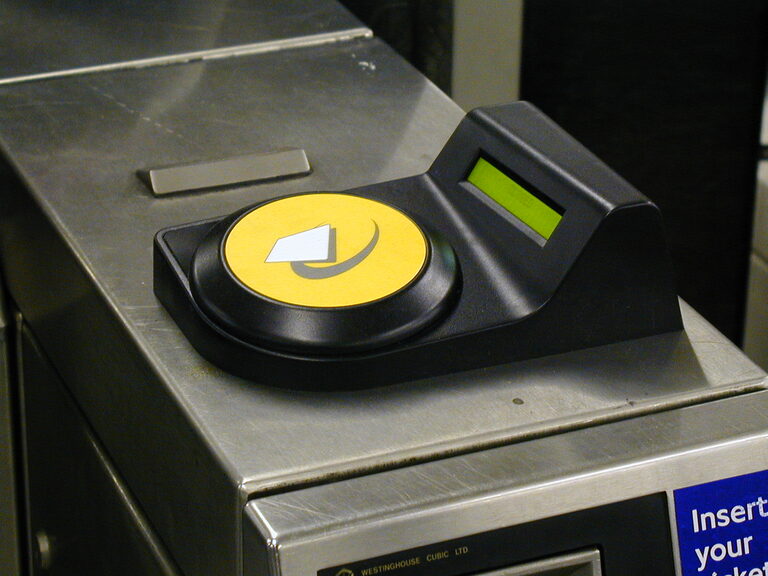
A yellow card reader on a London Underground ticket gate. Adults touch in on one at the start of the journey and touch out at the end.
- Adults can pay for the Tube by touching a contactless bank card, or a phone or watch with Apple Pay or Google Pay, on the yellow reader at the ticket gates as they go into the Tube and again at the end of the journey.
- Each person travelling on contactless needs a separate card or phone, but a phone or watch counts as a different card from the bank card linked to it, even on the same account, so one parent can pay for two people, one touching in with the card and the other with the phone.
- Use the same card/phone every time, and keep your phone charged, or you risk overpaying.
- Hold only one card or phone to the reader, and keep other cards away from it, or the reader may charge the wrong one.
- Many cards from abroad work, but your bank may charge an overseas transaction fee, and a phone linked to a non-UK card sometimes doesn’t work, so carry the card itself as well.
- Contactless only charges adult fares, so see Children’s tickets below for what children pay.
- If you use the same card or phone all day, Transport for London’s (TfL’s) daily cap stops your Tube and bus fares at £8.90 for Zones 1 and 2.
Children’s tickets
- Up to four children under 11 travel free with each paying adult on the Tube, and they don’t need a ticket or card.
- Children aged 11 to 15 pay the adult fare by contactless, or half fare with TfL’s Young Visitor discount on an Oyster card, which lasts up to 14 days.
- Staff at any Tube station, King’s Cross St Pancras included, can add the Young Visitor discount to an Oyster card or a Visitor Oyster card while the child is with you.
- An Oyster card costs £10.50, which TfL doesn’t refund, so for a single trip an 11 to 15-year-old pays less on the adult fare, but over a few days the discount saves more than the card costs, because it also halves their daily cap.
Paying at the station
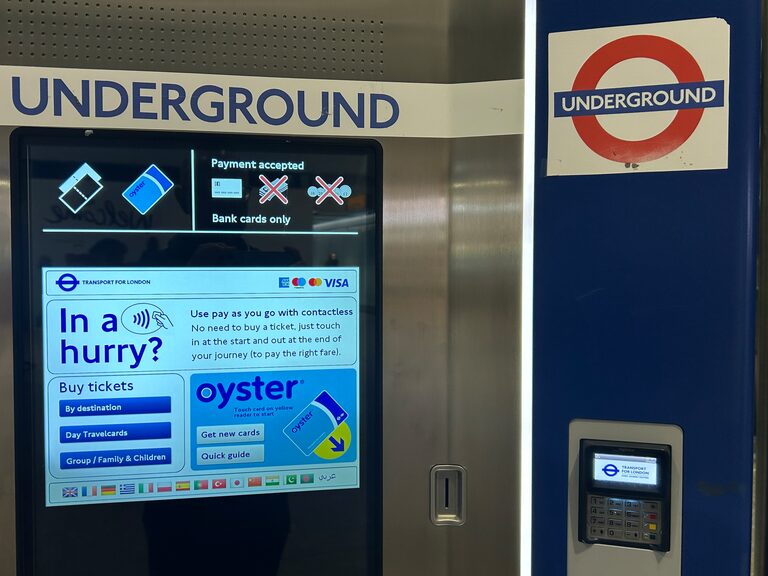
A Tube ticket machine, here at Heathrow Terminal 5, with flags along the bottom of the screen for changing the language.
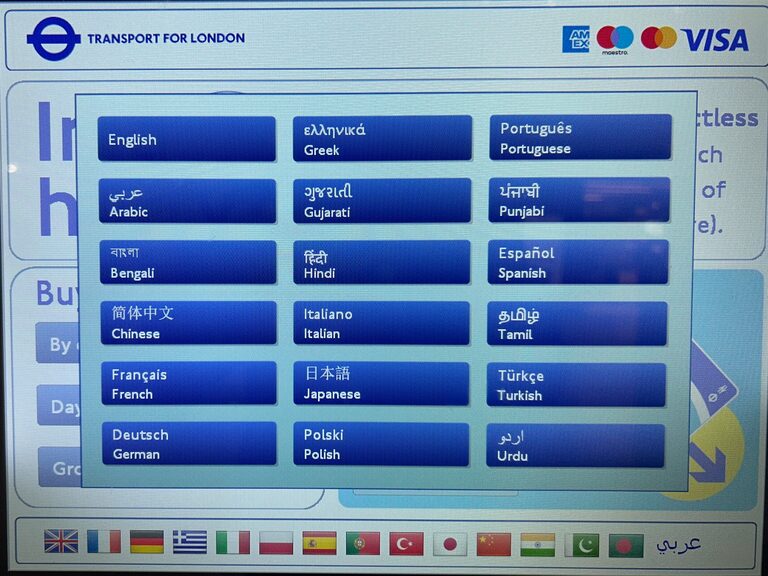
The ticket machine’s language menu, with 18 languages.
- Adults pay about £3 for a Zone 1 journey on the Tube by contactless or Oyster.
- The Tube station’s ticket machines sell Oyster cards, single tickets and Travelcards, and a row of flags at the bottom of the start screen switches them from English to Français, Deutsch, Italiano, Español, 简体中文, हिन्दी, Português, 日本語, Polski, العربية, বাংলা, Ελληνικά, ગુજરાતી, ਪੰਜਾਬੀ, தமிழ், Türkçe or اردو.
Booking ahead online or in an app
- You don’t need to book the Tube ahead, because contactless or Oyster covers the trip.
- TfL’s Visitor Shop can post Visitor Oyster cards to you before you travel, for £10.50 per card plus postage, with £10 to £50 of credit on each, and they’re useful for anyone without a contactless card that works in the UK.
Tickets to avoid
- Don’t buy Oyster or Visitor Oyster cards for under-11s, who travel free, or for adults whose contactless card or phone works, because each card costs £10.50 and TfL doesn’t refund it.
By bus
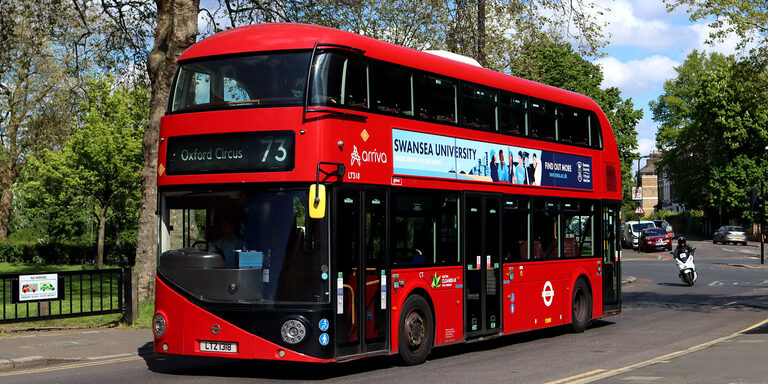
A number 73 bus, which stops near St Pancras on its way to Oxford Circus.
Buses cost £1.75 a ride (£1.85 from 1 November 2026), with free changes within an hour. The 73 goes to Oxford Circus and the 91 to Trafalgar Square; the N73 and N91 run through the night.
Buying tickets for the bus
Paying by contactless
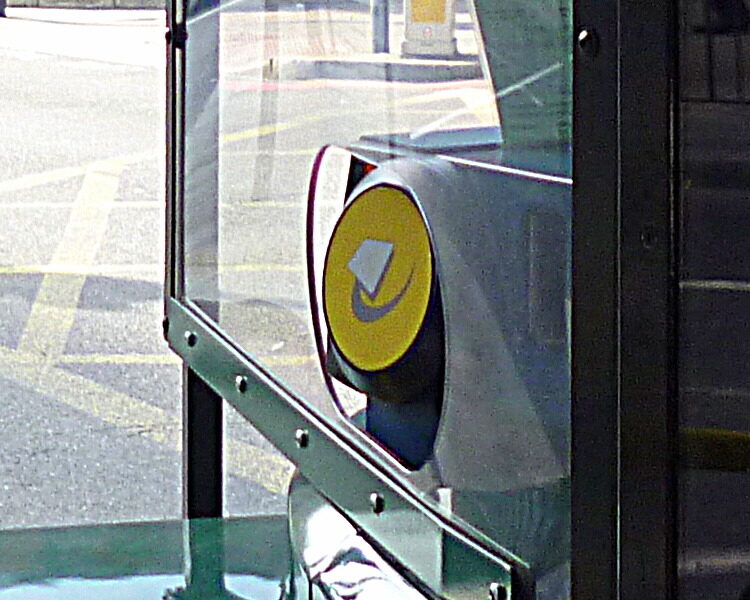
The card reader beside the driver of a London bus, seen through the cab’s glass. Adults touch in on it as they get on.
- London buses don’t take cash, so adults pay by touching a contactless bank card, a phone or watch with Apple Pay or Google Pay, or an Oyster card on the yellow reader as they get on.
- You only touch in when you get on the bus, not when you get off.
- Each person travelling on contactless needs a separate card or phone, but a phone or watch counts as a different card from the bank card linked to it, even on the same account, so one parent can pay for two people, one touching in with the card and the other with the phone.
- Hold only one card or phone to the reader, and keep other cards away from it, or the reader may charge the wrong one.
- Many cards from abroad work, but your bank may charge an overseas transaction fee, and a phone linked to a non-UK card sometimes doesn’t work, so carry the card itself as well.
- Contactless only charges adult fares, so see Children’s tickets below for what children pay.
- If you use the same card or phone all day, Transport for London’s (TfL’s) daily cap stops your Tube and bus fares at £8.90 for Zones 1 and 2.
Children’s tickets
- Under-11s ride the bus free.
- Children aged 11 to 15 pay the adult fare by contactless, or half fare (85p, or 90p from 1 November 2026) with TfL’s Young Visitor discount on an Oyster card, the same discount as on the Tube.
Paying at the station
- Adults pay £1.75 a ride on the bus (£1.85 from 1 November 2026) by contactless or Oyster, and changing to another bus within an hour is free.
By train
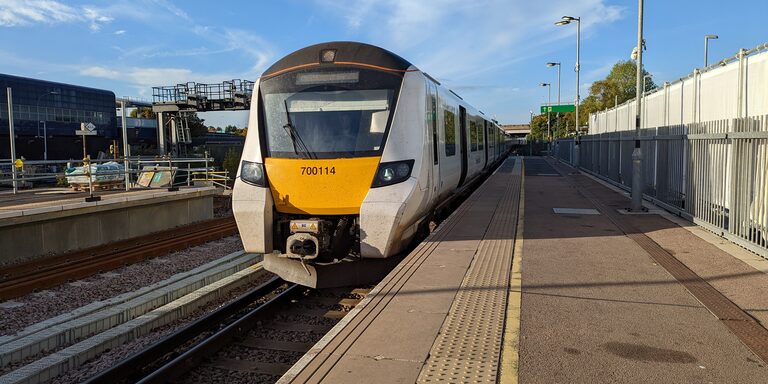
A Thameslink train at Gatwick Airport station. The trains are white, with a yellow front.
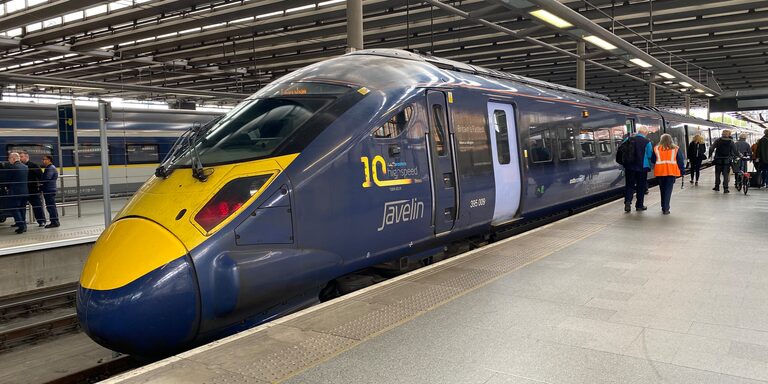
A Southeastern high-speed train at St Pancras International. The trains are dark blue, with a yellow nose.
Thameslink trains run from platforms A and B on the lower level to Farringdon (4 minutes; change there for the Elizabeth line), Blackfriars and, on most trains, London Bridge, for the same fare as the Tube. Southeastern high-speed trains take 7 minutes to Stratford International for the Olympic Park, at a special fare of about £5 off-peak.
Buying tickets for Thameslink and Southeastern high-speed trains
Paying by contactless
A yellow card reader on a London Underground ticket gate. Adults touch in on one at the start of the journey and touch out at the end.
- Adults can pay for Thameslink and Southeastern high-speed trains by touching a contactless bank card, or a phone or watch with Apple Pay or Google Pay, on the yellow reader at the ticket gates at St Pancras and again at the end of the journey.
- Each person travelling on contactless needs a separate card or phone, but a phone or watch counts as a different card from the bank card linked to it, even on the same account, so one parent can pay for two people, one touching in with the card and the other with the phone.
- Use the same card/phone every time, and keep your phone charged, or you risk overpaying.
- Hold only one card or phone to the reader, and keep other cards away from it, or the reader may charge the wrong one.
- Many cards from abroad work, but your bank may charge an overseas transaction fee, and a phone linked to a non-UK card sometimes doesn’t work, so carry the card itself as well.
- Contactless only charges adult fares, so see Children’s tickets below for what children pay.
- If you use the same card or phone all day, Transport for London’s (TfL’s) daily cap stops your Thameslink, Tube and bus fares at £8.90 for Zones 1 and 2.
Children’s tickets
- Up to four children under 11 travel free with each paying adult on Thameslink from St Pancras to Farringdon, Blackfriars and London Bridge.
- Children aged 11 to 15 pay the adult fare on Thameslink by contactless, or half fare (£1.50 off-peak) with TfL’s Young Visitor discount on an Oyster card, as on the Tube.
- Under-5s travel free on Southeastern high-speed trains, but unlike on the Tube and Thameslink, 5 to 10-year-olds don’t.
- Children aged 5 to 15 need a child ticket for Southeastern high-speed trains, at about half the adult fare, from a ticket machine, because contactless only charges adult fares.
Paying at the station
- Adults pay the same fare on Thameslink as on the Tube, about £3 for a Zone 1 journey, by contactless or Oyster.
- Adults pay about £5 off-peak on Southeastern high-speed trains to Stratford International by contactless or Oyster, and this special fare doesn’t count towards TfL’s daily cap.
Booking ahead online or in an app
- You don’t need to book Thameslink or Southeastern high-speed trains ahead, because contactless or Oyster covers the trip.
Black cab
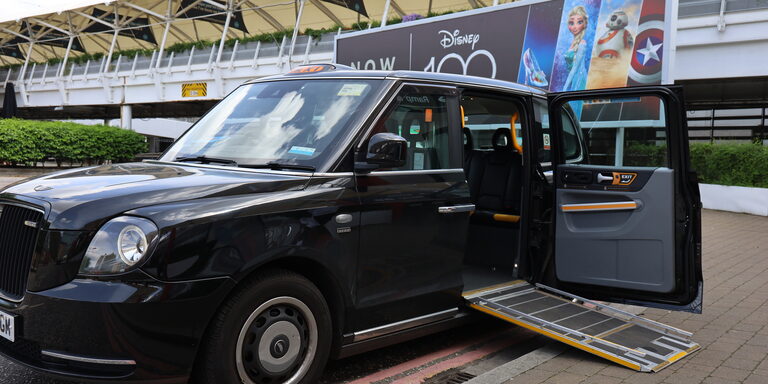
A London black cab with its wheelchair ramp down. Every black cab carries one.
The taxi rank is on Midland Road, on the west side of the station; follow the signs. Cabs are metered and can all carry a wheelchair. A trip to Charing Cross takes 15 to 25 minutes and costs about £13 to £22, or up to about £25 in heavy traffic.
If a black cab driver doesn’t provide the right child seat, the law lets children travel without one, but only in a back seat, with an adult seat belt if they’re 3 or older and without a belt if they’re under 3.
Paying for a black cab
Paying at the station
- Black cabs at the rank on Midland Road run on the meter, and every one must take contactless cards, with no extra charge for paying by credit or debit card.
- Black cabs also take cash. Tipping is up to you, but 10% is standard.
Booking ahead online or in an app
- You don’t need to book a black cab, because only black cabs can be hired at a rank without a booking, though you can also book one in the Freenow app.
Things to avoid
- Don’t get into a minicab you haven’t booked, including one whose driver comes up to you, because unbooked minicabs are illegal and uninsured for passengers.
Ride sharing
Uber and Bolt both work here, and the app shows where to meet your driver. You can also book a black cab with the Freenow app. The station’s pick-up bays for cars are on Pancras Road, on the east side of the station, and cars can’t wait there for long, so book once you’re near the exit.
Freenow, owned by Lyft, also books minicabs, which it calls Ride, for up to four people, and its EV and XL black cabs take six people.
Uber, Bolt and Freenow don’t supply child seats; Freenow’s cars have Isofix fittings for your own seat and its drivers can refuse to take a child without one. If the driver of a licensed taxi or minicab doesn’t provide the right child seat, the law lets children travel without one, but only in a back seat, with an adult seat belt if they’re 3 or older and without a belt if they’re under 3.
Booking and paying for a ride share
Paying at the station
- Freenow’s Ride cars cost a fixed price, which the app shows before you book.
- Freenow’s black cabs run on the meter after the app shows an estimate, and each trip carries a £2 service fee.
Things to avoid
- Don’t get into a minicab you haven’t booked, including one whose driver comes up to you, because unbooked minicabs are illegal and uninsured for passengers.
- If the driver or the car’s number plate doesn’t match your booking confirmation, don’t get in, because it isn’t safe.
Buggies (strollers) and luggage
Lifts (elevators) reach every platform and the Tube, station staff in blue tabards can help with bags, and there’s left luggage in The Circle. The station’s access guide (PDF) has the details.
Once you’re settled in, see Travelling around London for tips on getting about town.
🛜 Free, unlimited WiFi in the station. Connect to ‘St Pancras Free’. There’s no need to register, and it takes a couple of clicks.