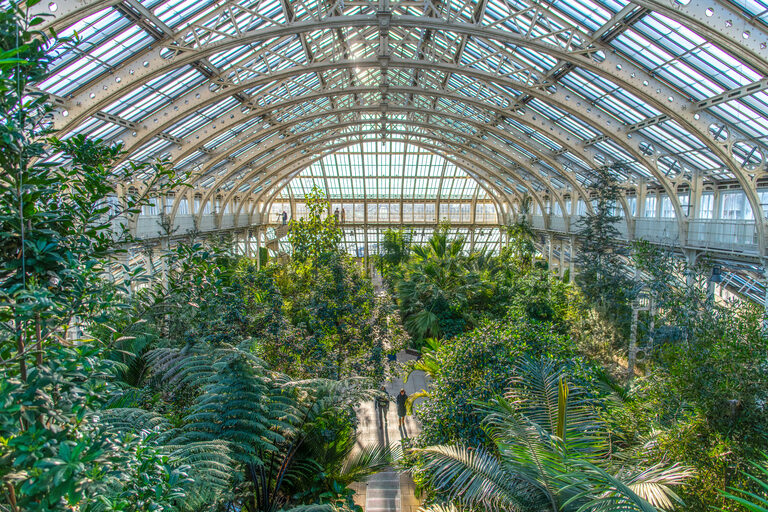
Tree ferns and palms under the glass roof of the Temperate House.
Before you go
- Prices
- Adults £17, children 4 to 15 £2, 16 to 29-year-olds £7 online (£20, £4 and £10 at the gate), under 4s free; Kew adds an optional donation when you book, which these prices leave out
- Open
- Daily from 10am; closing time changes with the season, so check opening times; closed 24 and 25 December
- Nearest station
- Kew Gardens (District line and Mildmay line), 10 minutes’ walk
- Plan your journey
- TfL Journey Planner, Google Maps or Uber
- Checked 31 October 2026
- Latest details on kew.org
The illuminated light trail of Christmas at Kew, from RG Live’s YouTube channel.
For families
- Kew Gardens
- Families at Kew Gardens
- Children’s Garden: an outdoor play area for ages 2 to 12; it’s quieter just after opening and late afternoon.
- Kew Explorer land train
- Eating and drinking: picnics are fine on the grass (no picnic furniture), and drinking-water fountains are all round the Gardens.
- Buggies (strollers): the Gardens are mostly level, with buggy parks, but buggies can’t go up the Treetop Walkway.
- Baby changing: in most toilets, and the Family Kitchen has a breastfeeding room with a microwave to warm bottles.
- Christmas at Kew evening light trail
- 2 for 1 by train: with National Rail tickets and a Days Out Guide voucher, two full-price adults get in for the price of one.
For neurodivergent visitors
- Visual guide (PDF): use it with the accessibility map (PDF), which marks quiet spots and sensory spots.
- Children’s Garden quiet sessions
- Free packs: sensory story sacks and activity packs and Picture Exchange Communication packs to borrow at Victoria Gate’s information desk.
- Christmas at Kew Quiet Access sessions: four evenings with entry times kept for visitors with hidden disabilities, such as autism.
Accessibility
- Accessibility at Kew Gardens
- Accessibility map (PDF)
- Wheelchairs and mobility scooters: borrow a wheelchair at any public gate without booking, or book a scooter ahead.
- Treetop Walkway and the Hive: neither takes mobility scooters; the walkway’s lift is sometimes out of use, so check first.
- Changing Places toilet: a large accessible toilet with a hoist, at Brentford Gate; ask gate staff for the key.
- Tickets: disabled visitors pay the concession (reduced) price; essential companions and registered blind or partially sighted visitors get in free.
Kew Gardens, or the Royal Botanic Gardens, Kew, is a botanic garden beside the Thames in south-west London, where scientists grow and study plants from around the world. More than 50,000 living plants grow across its 320 acres.
Things to know:
-
You really need wheels - they won’t let you take a bike or a scooter in - you’ve got to take the buggy (stroller) and maybe a buggy board for an older child, Kew Gardens is just too big and too far from the station for the walking capabilities of little ones.
-
Apart from the playground it’s a bit dull for small children. The palm house is fun for a few minutes (particularly if you go up to the top level and look down - but you can’t get a buggy up there) but if you have a baby in a sling it gets too hot very quickly. It is a really good playground - but by itself the playground isn’t really worth the entrance fee and the travel.
-
The pagoda is fun to look at, but it’s closed until spring 2027 - and even when it’s open it’s not really worth dragging small children up the climb to the top.
-
Look at the map carefully, and don’t try to do everything on it unless your kids are very good walkers (or they’re on wheels).
-
On a sunny day it’s a good place for a picnic with friends. There’s room for kids to run around and play, although ball games aren’t allowed.
-
It’s pretty pricey for the amount of entertainment it provides.
-
We haven’t been to the Christmas lights but we hear that they’re good.
-
You can get a boat from central London to/from Kew Pier, a short walk across Kew Green from Elizabeth Gate - so you kind of get a river tour, and a bit of a rest!

Running through a curtain of hanging lights at Christmas at Kew.

A ride in a little red car at Christmas at Kew.
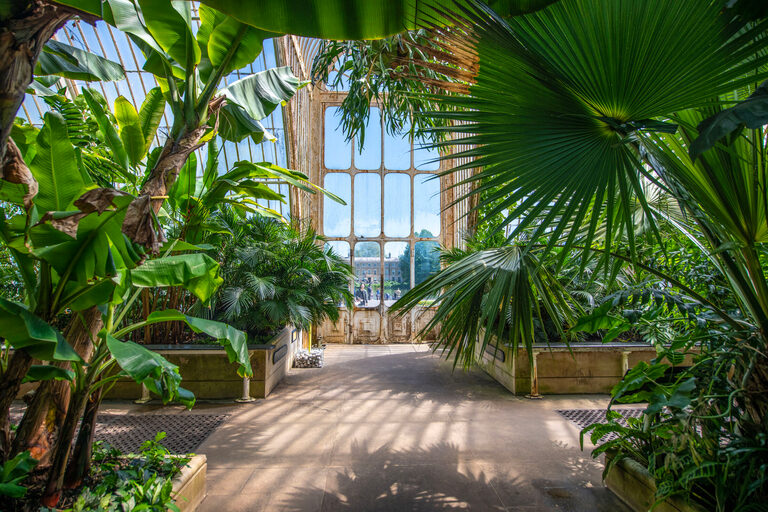
Banana plants and palms either side of a path in the Palm House.
For children there’s a huge outdoor play garden, a walkway high in the treetops, a giant beehive sculpture to walk into, and glasshouses of tropical plants for a rainy day.
Allow at least half a day, and download the map of the Gardens before you go. From Victoria Gate, the gate nearest Kew Gardens station, the Children’s Garden is about 15 minutes’ walk.
What to see
The Children’s Garden, the size of 40 tennis courts, has four areas, themed on earth, air, sun and water. Children slide down tubes, bounce on trampolines, lie in hammocks and cross a stream on stepping stones. In the middle, a canopy walk 4 metres up winds round a 200-year-old oak.
The Treetop Walkway, near the Temperate House, takes you 18 metres up among the branches of chestnut, beech and oak trees, by 118 steps or a lift. The walkway flexes a little in the wind. It’s not super-interesting for little kids though - you go up, you go along, and then you go down again.
The Hive is a 17-metre-high sculpture of a beehive that you walk into. Its 1,000 lights and its music change with the vibrations of real bees in a hive at Kew.
In the Natural Area, 37 acres of wild woodland, children can crawl into a metre-high model of a badger sett (a badger’s burrow) and balance along a trail of fallen logs.
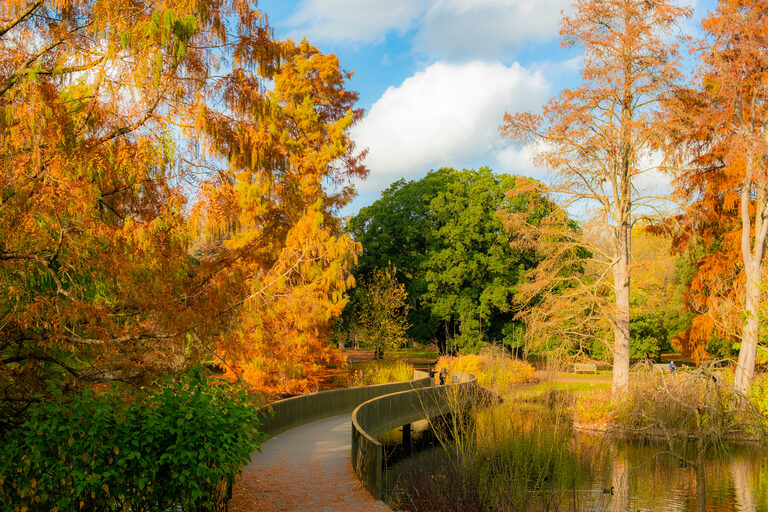
The curving bridge across the lake, among autumn trees.
There’s a bridge across the lake with upright poles on both sides, with a curve in it - going over it is fun - at least our kids thought so.
The Japanese gravel garden also appealed (briefly) to our kids.
The glasshouses
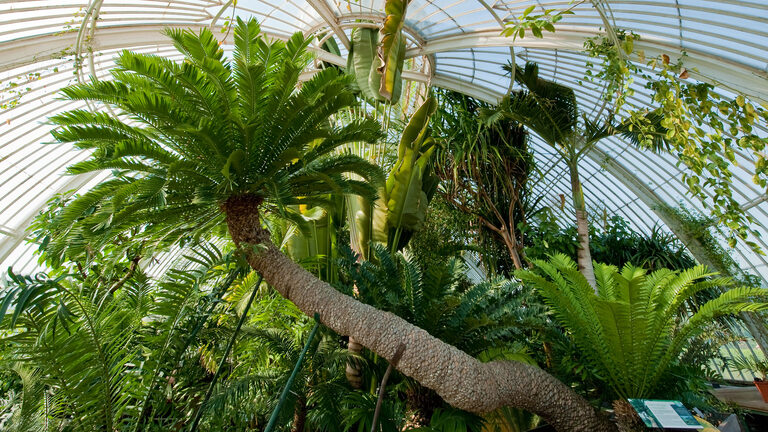
A giant cycad in the Palm House, its long trunk leaning under the glass roof.
The Palm House, opened in 1848, closes in February 2027 while its plants are moved out. It’s due to open again, empty, in summer 2027, then close in autumn 2027 for three to four years of repairs. Until February it’s an indoor rainforest, where the heavy, tropical air can steam up glasses. Climb the winding staircase to the upper walkway, and look for carnivorous plants and the world’s oldest potted plant, a giant cycad (a plant that looks like a palm) that came to Kew in 1775.
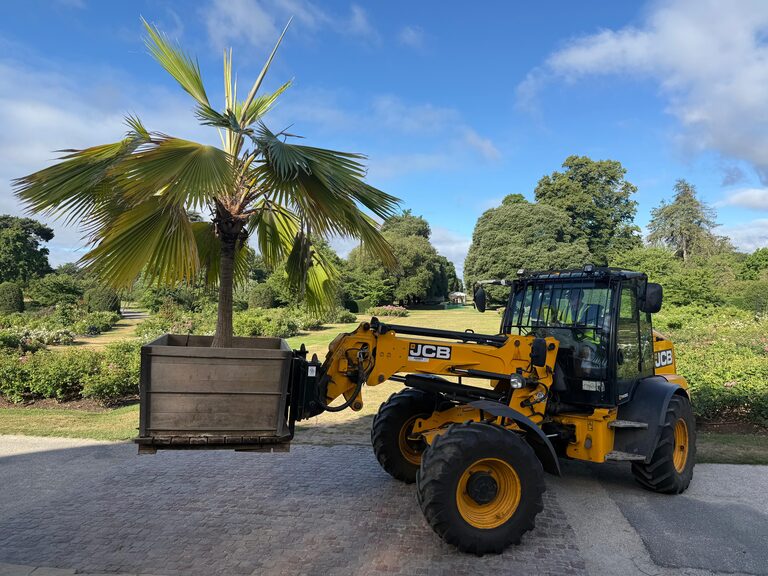
A palm from the Palm House on the move in a wooden crate.
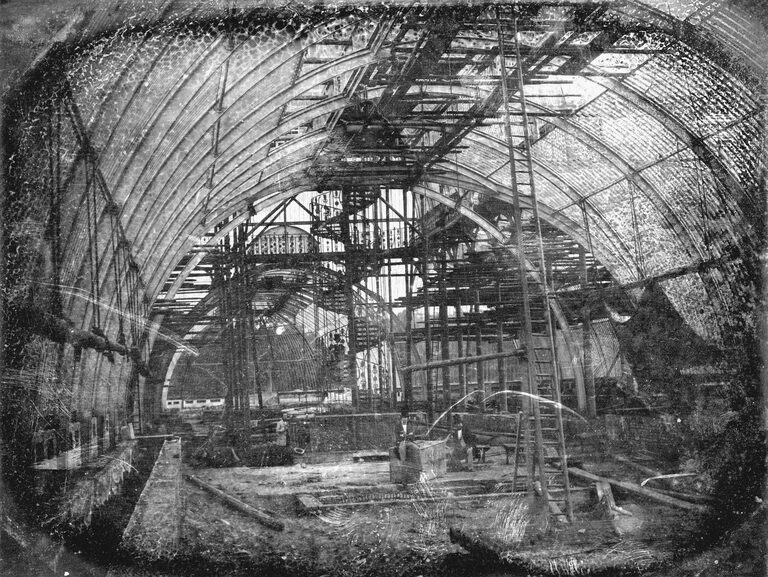
An old photograph of the inside of the Palm House, full of scaffolding and ladders.
The Princess of Wales Conservatory has ten climate zones, among them dry tropics with cacti, wet tropics with orchids, and a zone of carnivorous plants such as Venus flytraps.
Planning the day
At the information desk in Victoria Plaza, by Victoria Gate, you can hire a scientist backpack of activities and art materials for £4.50. There’s one for ages 3 to 7 and one for 7 and over. Or download a seasonal spotter sheet or family trail to bring.
The glasshouses, the Treetop Walkway and the Children’s Garden usually close an hour before the Gardens, so on a short winter day see them first. Parts of the Gardens sometimes close for repairs, so check the planned closures.
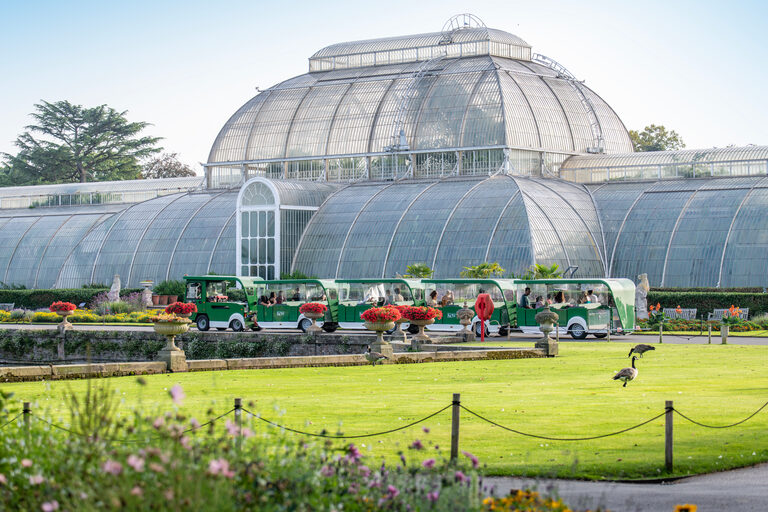
The Kew Explorer land train passing the Palm House.
The Kew Explorer land train, which costs extra, runs from 11am and takes 30 minutes to go round its six stops, starting at Victoria Plaza. Get off at Brentford Gate for the Children’s Garden.
Food
The Family Kitchen & Shop, just behind the Children’s Garden, has pizza, salads and sandwiches, hot meals with children’s portions, and ice cream. We’d skip the Botanical Brasserie with small children, as it’s formal dining. The seats at the cafés are for people who’ve bought food there. For a picnic, try the giant picnic table in the Natural Area.
When to go
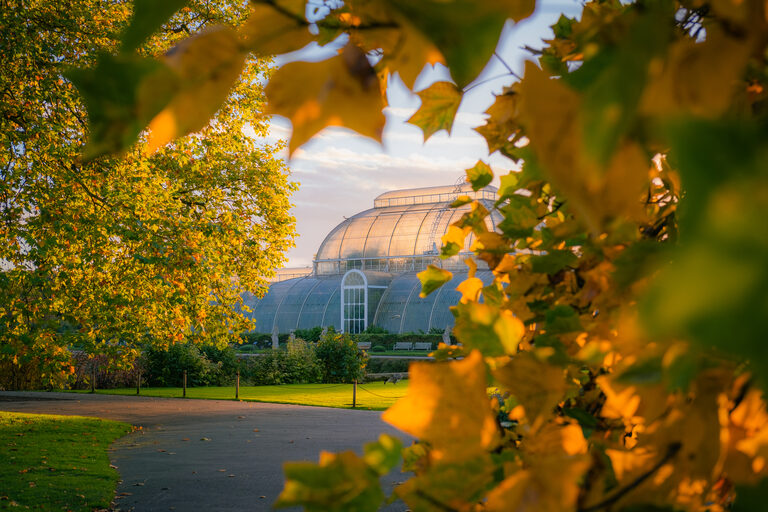
The Palm House through autumn leaves.
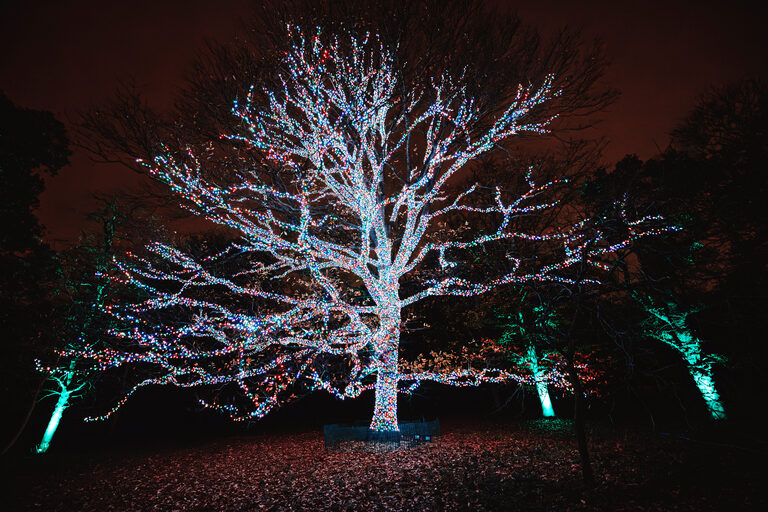
A tree covered in coloured lights on the Christmas at Kew trail.
In autumn many of Kew’s trees are at their most colourful, and in spring bluebells flower in the woods round Queen Charlotte’s Cottage.
Tickets
Through National Rail’s Days Out Guide, two adults get in for the price of one if they arrive by train. The offer is for full-price adult tickets at the gate, and can’t be combined with another discount. Print a voucher from the website, one for every two adults, and show it at the gate with your train tickets. A ticket from London Waterloo to Kew Bridge station counts, and so does a Travelcard (a London travel pass) bought at a National Rail station. Oyster cards (London’s travel smartcard), contactless payments and Tube-only tickets don’t count.
If you get Universal Credit or Pension Credit (UK benefits), you pay £1, and one more adult and up to four children aged 4 to 15 pay £1 each, online or at the gate, with proof of the benefit.
Getting there
Elizabeth Gate, on Kew Green, is nearest the Children’s Garden, the Hive and the Princess of Wales Conservatory. It’s 800 metres from Kew Bridge station, which isn’t step-free, and a short walk from Kew Pier. Thames River Boats sail to Kew Pier from Westminster Pier in 1¼ to 1¾ hours, at times set by the tides. The boats don’t sail all year, so check the sailings first. Kew has no lockers or bag storage, so leave suitcases at your hotel.
From Thursday to Sunday, you could add a morning at the London Museum of Water and Steam, by Kew Bridge station.
🛜 Free WiFi in Kew’s cafés and visitor centres. Connect to ‘Kew-Visitors’ and accept the terms and conditions.