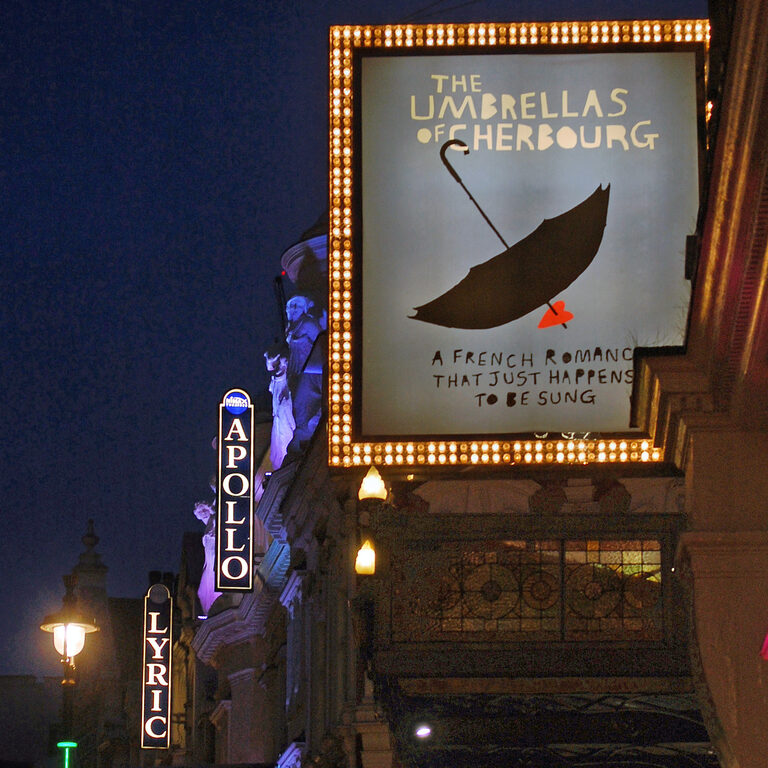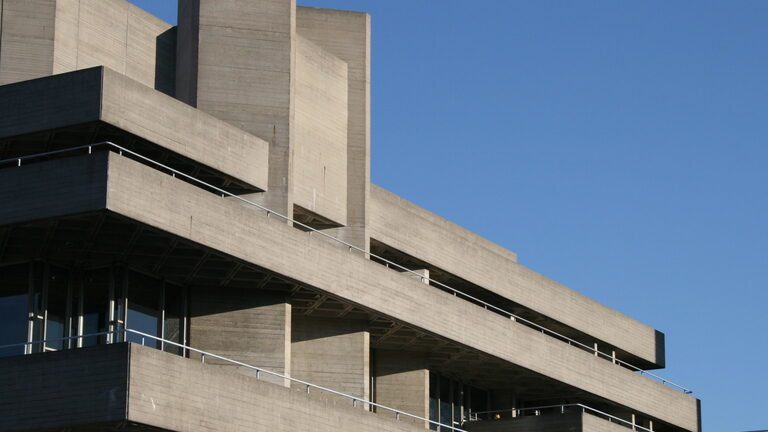
Concrete balconies stacked up the side of the National Theatre.
Now, plonked down on the south bank of the River Thames, in between the London Eye and the Tate Modern art gallery, are a set of Brutalist concrete buildings which look like a series of carpet warehouses but have all kinds of interesting and inspiring things happening in and around them.
How to get there
- Tube to Waterloo, then walk following signs.
- Walk from Trafalgar Square down Northumberland Avenue, which leaves the south-east corner of the square, to the river (about 5 minutes), or get the Tube to Embankment. Then walk over one of the Golden Jubilee footbridges to get to the other side of the Thames. There’s two spans to this footbridge (they’re on either side of a railway bridge) and they both have great views, and are a really good place for photos. From the west span, you get a great view of the Houses of Parliament and Big Ben on one side of the river, and the London Eye on the other. From the east span, you can see the City of London (St Paul’s Cathedral, the Gherkin, Tower 42, etc), the Shard, and in the distance the Docklands skyscrapers (Canary Wharf etc). So long as it isn’t raining, go this way; it’s worth the walk. For step-free access, there is a lift (elevator) at each end of the Golden Jubilee bridges.
There’s a bunch of things to see on the South Bank, and they’re close enough together that you can see them all in one trip - that’s why we’ve lumped them together here in one article.
So - what’s to see?
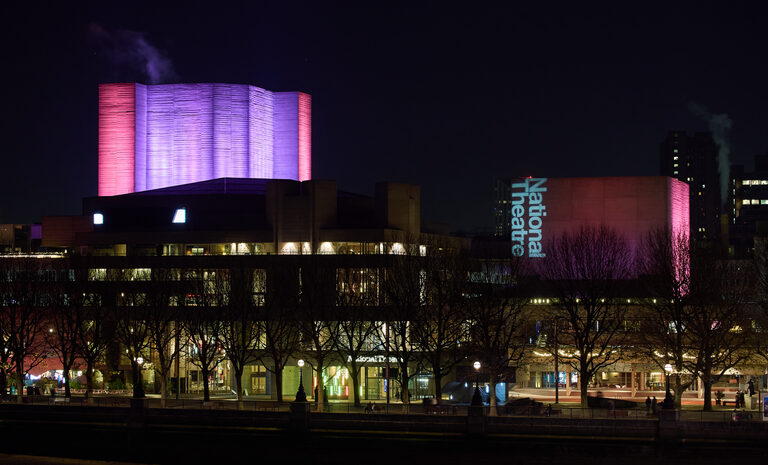
The National Theatre’s towers lit pink and purple at night.
The National Theatre: Brutalist architecture at its best/worst
- Free in-person and online theatre-making workshops and courses for young people aged 13–30
- Accessibility
- Free exhibitions
This is the home of the UK’s state-subsidised theatre company. So the shows here tend towards the literary/intellectual/worthy, but usually not so much so as to make them inaccessible or dull. Expect mostly plays rather than musicals, although there are exceptions (e.g. they did a very good Oklahoma! revival). Sometimes shows transfer to the West End (at much higher ticket prices) after starting life here.
Quality of the shows is generally excellent, although obviously it varies depending on the particular production. Tickets start at £10 (which is a bargain) through the Friday Rush: every Friday at 1pm they release £10 tickets for the following week’s shows. Young people do even better: 16 to 18-year-olds can get £5 tickets, and 19 to 25-year-olds £10 tickets, for any show (two per production at most). A quarter of all seats cost £30 or less, and if a show isn’t sold out, any unsold tickets go on sale at the box office an hour before it starts - see ways to save for details.
There are 3 theatres, the Olivier, the Lyttelton and the Dorfman. Productions specifically intended for children are likely to be very high-quality. There are also all kinds of one-off events, some of which are free of charge: see things to do for those, and what’s on for the shows.
For reviews, see the same sources as for West End theatres. The best productions sell out months in advance, so consider buying tickets before your trip to London.
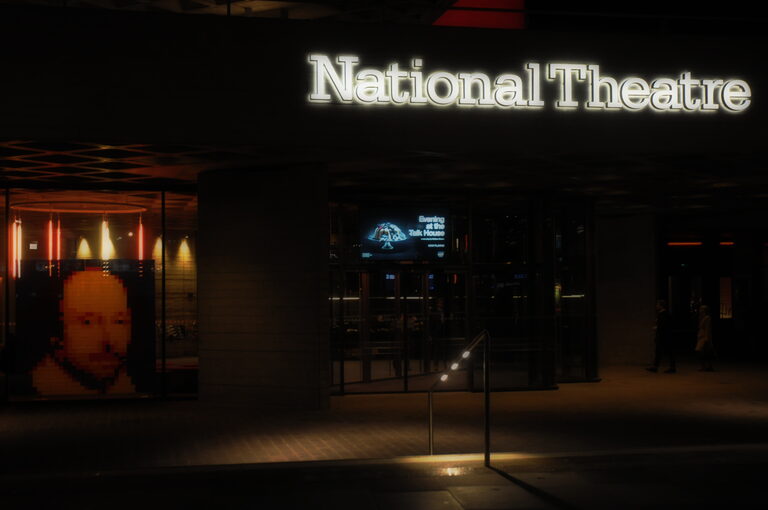
The National Theatre’s entrance at night, under its lit-up name.
The Southbank Centre: Want geometric shapes? You’re in luck!
OK, so the South Bank Centre (these days they seem to run the first two words together, but there’s branding for you) is a big concrete-block arts centre, and there’s always a great deal going on.
Within the complex there’s an art gallery (The Hayward Gallery), three concert halls (the Royal Festival Hall, the Queen Elizabeth Hall and the Purcell Room), a poetry library, and a bunch of other indoor and outdoor ‘spaces’.
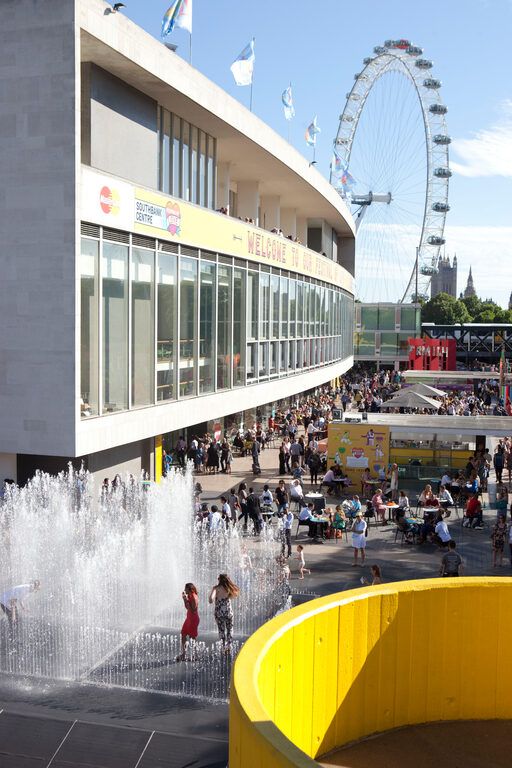
Children in Appearing Rooms, Jeppe Hein’s walk-in fountain, outside the Royal Festival Hall, with the London Eye behind.
Mostly you need to check the programme and buy tickets in advance for events taking place in the concert halls. The same goes for the big exhibitions at the Hayward Gallery: they need a timed ticket, and none are kept back for people who turn up on the day (a limited number of cheaper tickets go to under-16s, except in a show’s last week). The other art ‘spaces’ you can just turn up and walk into: the free HENI Project Space next to the Hayward, the outdoor art, and the Royal Festival Hall foyers. But the most interesting thing for families is the outdoor events which take place in various parts of the centre.
There’s often outdoor performances, and on the riverfront there’s restaurants, a book market, and (as you walk up towards the London Eye) a traditional carousel (merry-go-round with horses) - at Christmas there’s a market, and each summer there are free outdoor gigs, shows and parties on the Riverside Terrace. Indoors, circus and cabaret are par for the course, especially over Christmas.
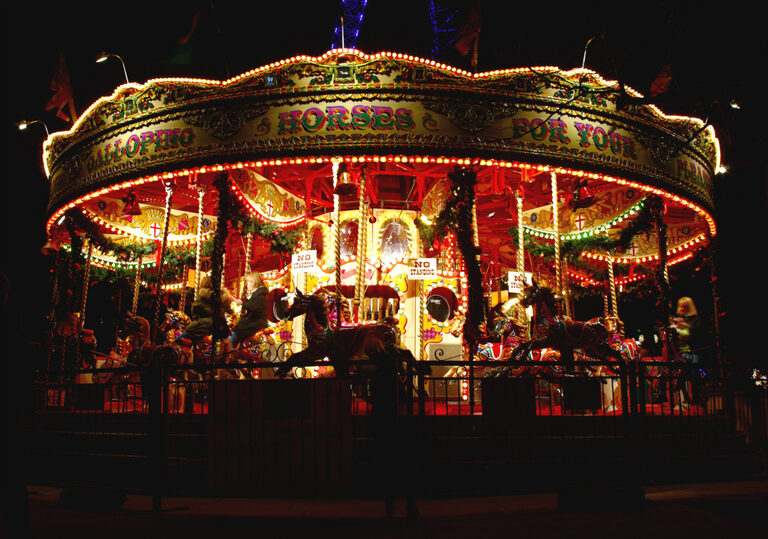
The Golden Carousel on the Queen’s Walk, near the London Eye, lit up at night.
If you have rebel teenagers then point them towards the Undercroft (aka Southbank Skate Park), which has been a hangout for skateboarding, BMXing, graffiti and similar since the 1970s. Skaters won a campaign against plans to move them out in 2014, and the space has since been restored and enlarged. It’s at the front of the Southbank Centre facing the river, underneath the Queen Elizabeth Hall. On the riverfront going along towards the London Eye there’s often breakdancing too.

A skateboarder mid-jump in front of the graffiti in the Undercroft.
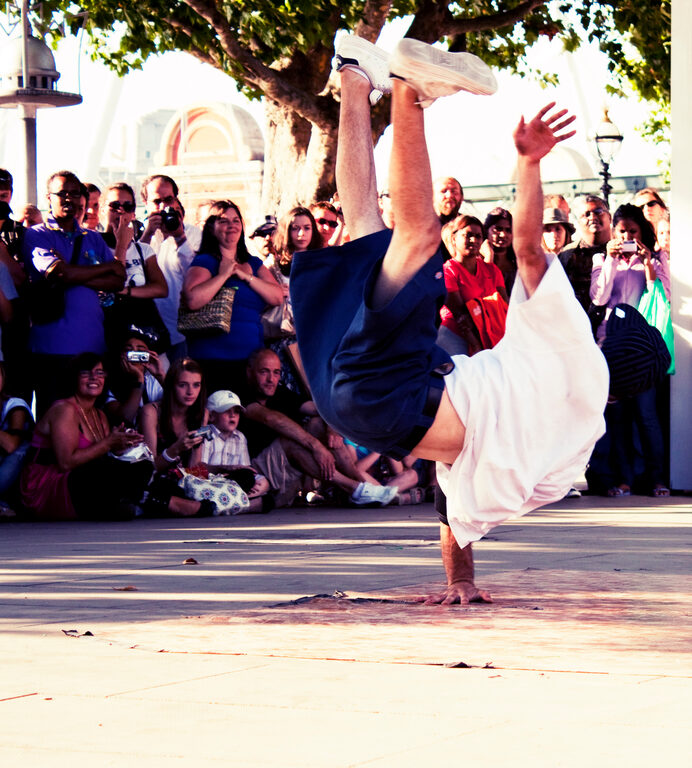
A breakdancer on the riverside walk.
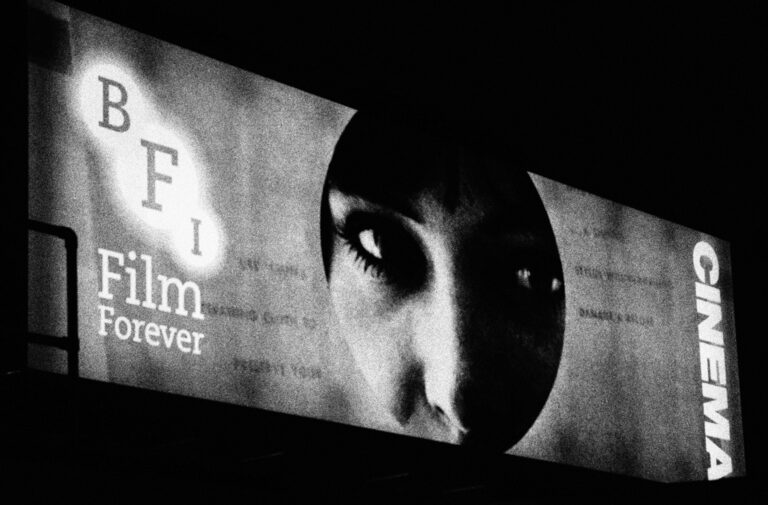
A woman’s face on the BFI’s lit sign at night.
BFI: Mostly tucked away under Waterloo bridge
- Films and events for families
- bfifamilyfilms (YouTube)
So: Movies (and TV). The free ‘Mediatheque’ - a room of viewing booths with touch screens - lets you watch any of more than 180,000 films and TV programmes from the BFI’s archive. They lend you headphones (free of charge) for the audio. Some of the viewing spaces are larger, and have more than one headphone connection, for a group of people to watch the same thing together. There’s no need to book: just pick a free booth. It’s open Tuesday to Sunday, 11am to 9pm (closed on Mondays, except bank holidays). If your kids are tired and need a bit of a rest, or if you have a few hours to kill, this is a pretty good (and free!) activity.
For watching movies in the normal way: it really depends what’s on. The BFI is (in effect) a big ‘art house’ cinema, so they have more obscure/interesting/international films and less of the commercial blockbusters. They run all kinds of festivals and special events, so take a look at what’s due to be on while you’re in town.
There’s also a daily book market under Waterloo Bridge.
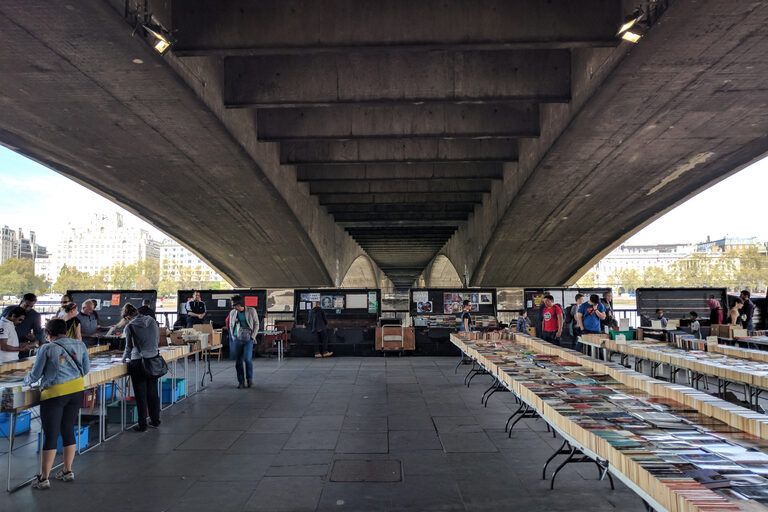
Rows of book tables under the bridge, with the Thames beyond.
🛜 Free WiFi throughout the National Theatre’s foyers. Connect to ‘NT Public’, which has no password. There’s free WiFi in the BFI Café, the BFI Bar and the Hayward Gallery Café too.